
It’s Giving Appropriation: The Problem with AAVE in Queer Circles

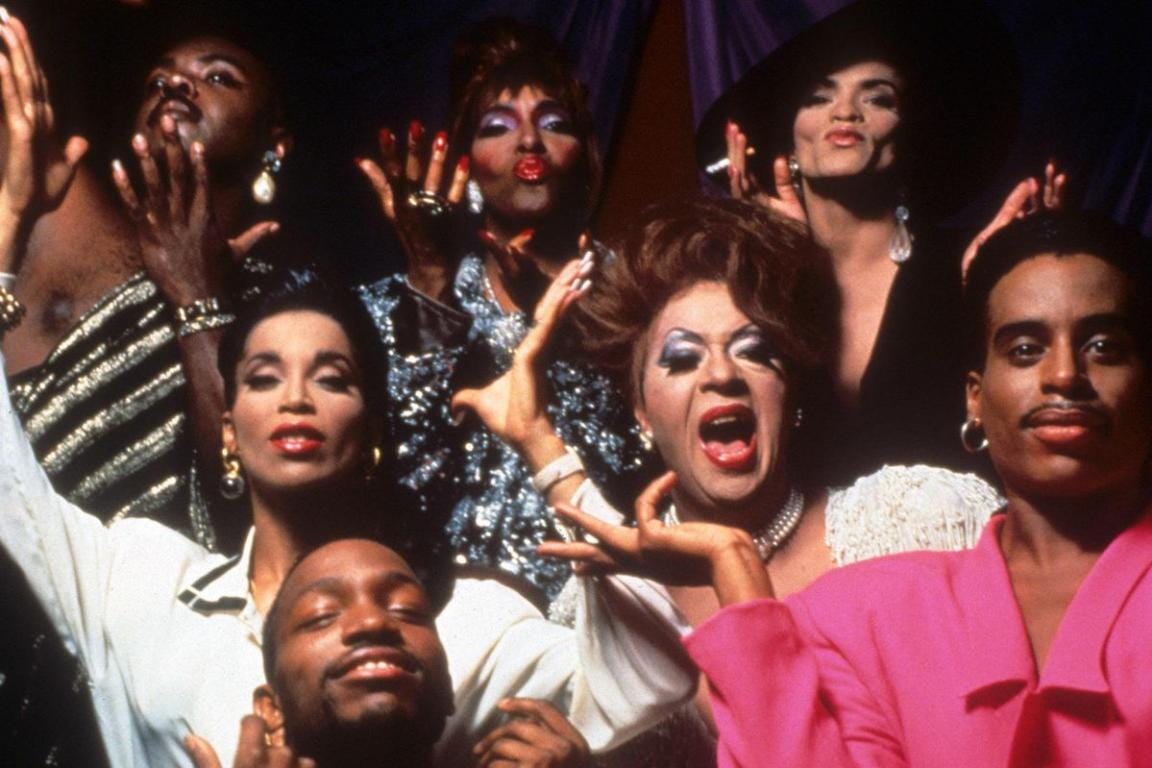
In queer bars, on TikTok, in drag shows, and across stan Twitter, a particular lexicon reigns. It’s bold, rhythmic, and punchy. Words like “slay,” “periodt,” “sis,” “whew chile,” and “no tea, no shade” populate conversations and captions alike, tossed off with flair and flourish. For many, these phrases are part of what makes queer culture queer—an expressive shorthand, a communal wink. But strip back the glitter, and what remains is an uncomfortable truth: much of this language is not originally queer at all. It is Black.
African American Vernacular English (AAVE) is a linguistic tradition with deep roots in the history, survival, and creativity of Black communities in the United States. Born from centuries of oppression and cultural resilience, AAVE is not just a dialect; it is a vessel of identity, connection, and resistance. And yet, within today’s mainstream LGBTQ+ culture—especially among white queer people—AAVE has been appropriated, decontextualized, and aestheticized into something consumable, meme-able, and too often, uncredited.
Many defend the use of AAVE-derived slang as simply “internet speak” or “drag lingo.” But this framing erases the fact that what’s now trending online has long been foundational to Black queer life—particularly that of Black trans women, drag performers, and ballroom communities. Phrases popularized in shows like RuPaul’s Drag Race or on TikTok often trace back to decades-old ballroom slang, Black sitcoms, or even church vernacular. The phrase “Yas queen,” for instance, is rooted in 1980s New York ballroom culture—an enclave created by Black and Latinx queer folks who were shut out of white gay spaces and used language as both defiance and sanctuary.
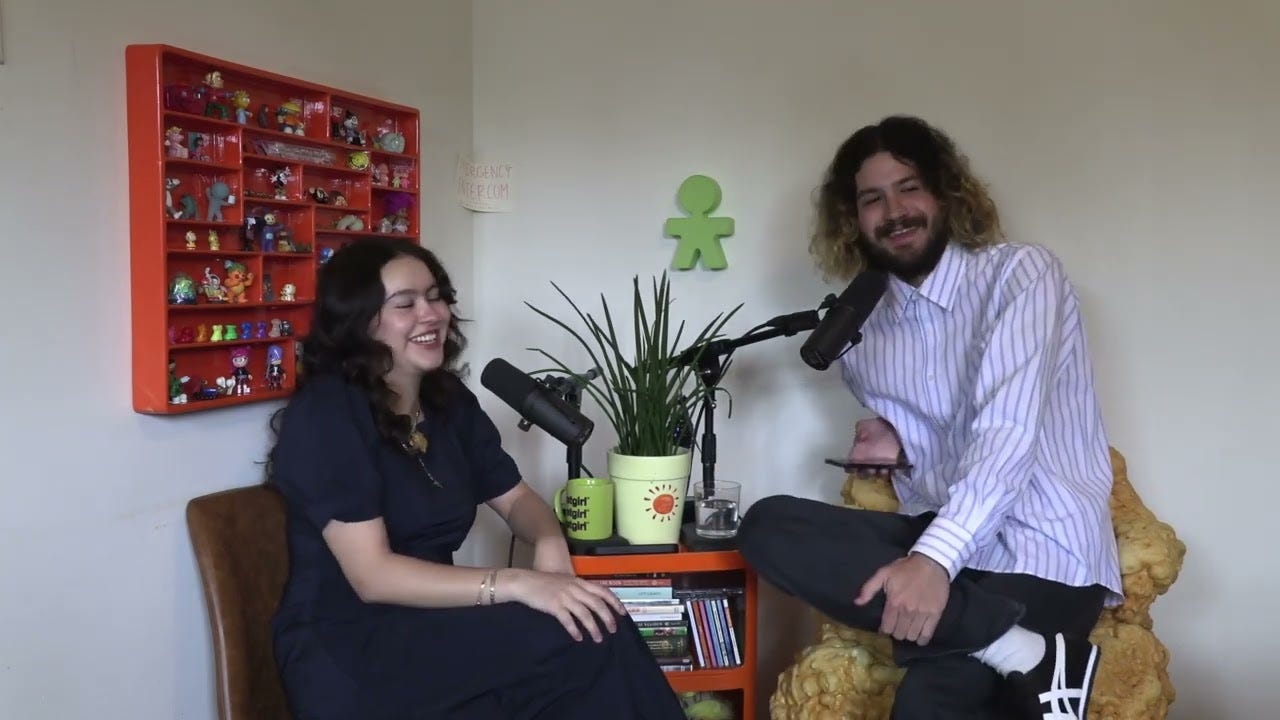
This flattening of culture plays out not just online, but across popular media. Consider Emergency Intercom, a podcast hosted by Enya Umanzor and Drew Phillips, which has garnered a devoted following for its offbeat humor and chaotic energy. While the show is undeniably entertaining, it also showcases a frequent, uncritical use of AAVE—particularly by Umanzor, who, despite her Latina heritage, does not belong to the Black community. Her casual deployment of phrases like “deadass,” “no cap,” or “you ate”—infused with an exaggerated vocal cadence often associated with Black speech patterns—illustrates how AAVE can become a performative accessory, signaling irony or attitude for laughs. The podcast, like much of internet culture, turns Black linguistic expression into spectacle—divorced from the context, struggle, and creativity that birthed it
To borrow AAVE without understanding this history is not just careless; it is a form of cultural colonization. The words are taken, stripped of context, and repackaged—often for profit or virality—by people who do not face the same marginalization as those who created them.
The LGBTQ+ community often prides itself on being inclusive and progressive, yet it is not immune to the same dynamics of racism and power that permeate broader society. In fact, white queer people—many of whom have faced their own forms of marginalization—can fall into the trap of seeing Blackness as edgy, cool, or subversive. This creates a dangerous pattern: Black culture is mined for style and speech, but Black people are excluded, disrespected, or even penalized when they exhibit the same behaviors.
A white gay man might be applauded for saying “bitch, I’m gagged,” while a Black woman saying the same might be deemed “aggressive” or “ghetto.” The irony is profound: the originators of this language are often pushed to the margins of both queer spaces and society at large, while their words travel without them.
Language is never neutral—it carries histories, geographies, and power dynamics. When non-Black LGBTQ+ people adopt AAVE performatively, it becomes something closer to costume than communication. It’s a way to signal sass, rebellion, or queerness without engaging with the communities who birthed the language. Worse, it can flatten Blackness into caricature, reinforcing stereotypes under the guise of “camp” or “drag.”
This is not to say that people must never use words born in Black communities—but intent, context, and respect matter. Ask: Am I using this term to express myself authentically, or because it sounds “cool”? Do I understand where it comes from? Would I speak this way around Black people, or only in “safe” queer bubbles?
So what does it mean to be accountable? First, it means acknowledging that AAVE is not a public domain dialect or a quirky internet trend. It belongs to a culture that continues to be surveilled, criminalized, and marginalized in ways most white queer people will never experience.
Second, it requires intentional unlearning. Elevating the voices of Black queer creators, scholars, and artists is one place to start. Learning the origins of certain phrases—and ceasing to use those we don’t fully understand—is another. Most importantly, it means interrogating why so many non-Black queer folks feel entitled to Black expression but not Black struggle.
And finally, it means honoring the contributions of Black LGBTQ+ people—not just for their style, but for their survival. The ballroom scene wasn’t built on catchphrases. It was built on the bones of those denied family, employment, safety, and life. Language was their resistance. It deserves reverence, not replication.
The problem isn’t language evolving or cultures intersecting—that’s inevitable and often beautiful. The problem is power. The problem is silence. The problem is using someone else’s voice while ignoring their pain.
So, the next time you catch yourself saying “slay” or “it’s giving,” pause. Ask yourself: Whose words are these? Whose world did they come from? And who gets to be heard when the performance is over?